
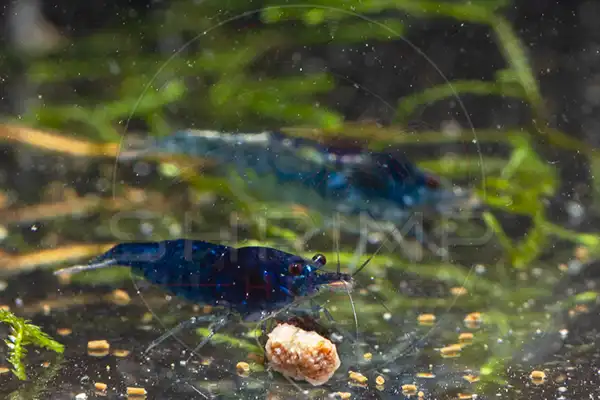
Neocaridina shrimp are hardy, but they are not indestructible. Most problems we hear about come down to water, and almost always to water that is unstable rather than water that is slightly off. This guide gives you the numbers we keep our own tanks at, and explains which ones actually matter.
Neocaridina water parameters at a glance
| Parameter | Safe range | What we aim for |
|---|---|---|
| Temperature | 18–28°C | 21–24°C |
| pH | 6.5–8.0 | 7.0–7.6 |
| GH (general hardness) | 4–12 °dH | 6–8 °dH |
| KH (carbonate hardness) | 0–8 °dH | 2–5 °dH |
| TDS | 100–400 ppm | 150–250 ppm |
| Ammonia / nitrite | 0 ppm | 0 ppm |
| Nitrate | Under 20 ppm | Under 10 ppm |
Stability matters more than perfect numbers
A tank that sits at pH 7.8 every day is far safer than one that swings between 6.8 and 7.6. Shrimp can adapt to a wide range, but sudden changes stress them and can cause failed moults. That is why big water changes are risky: they can shift temperature, hardness and TDS in one go.
- Change 10–20% of the water each week rather than 50% now and then.
- Match the temperature of new water to the tank.
- Always use a dechlorinator on tap water.
- Top up evaporation with dechlorinated water, not straight tap water.
GH: the one most people overlook
GH is the measure of calcium and magnesium in the water, and shrimp use these minerals to build each new shell. Too low and they struggle to moult; too high and the new shell can harden before they escape the old one. If you see shrimp dying mid-moult, test GH first. Most UK tap water lands in a good range for Neocaridina, but very soft areas may need a mineral additive.
Temperature
Neocaridina are happy at room temperature in most UK homes, but a cold winter night can drop an unheated tank below 18°C, which slows breeding. A small heater set to about 22°C keeps things steady. Above 28°C, oxygen drops and lifespan shortens, so keep tanks out of direct sun in summer.
Ammonia, nitrite and nitrate
Shrimp are more sensitive to ammonia and nitrite than most fish. Never add shrimp to a tank that hasn’t finished cycling – see our first shrimp tank setup guide for how to cycle properly. Once a tank is mature, a light feeding routine and weekly small water changes keep nitrate low.
Things that should never go in a shrimp tank
- Copper. Many fish medicines and some plant fertilisers contain it. Even small amounts kill shrimp. Always check the label.
- Pesticides on new plants. Rinse well, or buy tissue-culture plants.
- Household sprays near the tank, including air fresheners and fly spray.
Testing
A liquid test kit for ammonia, nitrite, nitrate, pH, GH and KH covers everything you need. A cheap TDS pen is handy for spotting changes between tests. If shrimp start dying and you are not sure why, test first – our guide on why shrimp die walks through the usual causes.
Frequently asked questions
Can Neocaridina live in UK tap water?
In most of the UK, yes, once it has been dechlorinated. Very soft or very hard areas may need adjusting, so test GH and pH before you buy.
What temperature do Neocaridina need?
Anywhere between 18 and 28°C, with 21–24°C ideal. Steady matters more than exact.
Do I need RO water for Neocaridina?
Usually not. RO (reverse osmosis) water is more useful for Caridina shrimp. Neocaridina do well in suitable tap water.
