A clean-up crew is a team of shrimp, snails and small fish that eat algae, leftover food and decaying plant matter. Pick the right mix and your glass stays clearer, your plants stay cleaner and less waste builds up. Pick the wrong mix and you can end up with fish that outgrow the tank or eat your baby shrimp. Here are three popular combinations, what each animal does, and which ones are safe with shrimp.
What a clean-up crew does (and doesn’t do)
- Grazes algae on glass, rocks, wood and leaves.
- Eats leftover food before it rots and fouls the water.
- Breaks down dead plant matter and turns over the substrate.
What it won’t do is replace maintenance. A crew still produces waste of its own, so you still need regular small water changes, a good filter and sensible feeding. If algae is out of control, the cause is usually too much light or too many nutrients, and no crew will fix that on its own.
Group 1: Amano shrimp, nerite snails and Otocinclus
Best for: planted tanks and community tanks from about 40 litres. This is the most dependable algae team of the three, and every member is shrimp-safe.
- Amano shrimp are the hardest-working algae-eating shrimp, especially on hair and thread algae. They grow to about 5 cm and their babies can’t survive in fresh water, so numbers never get out of hand.
- Nerite snails are excellent on glass, rocks and wood. They lay small white eggs that won’t hatch in fresh water, so they won’t take over. Keep a lid on, as they can climb out.
- Otocinclus are tiny, peaceful catfish that eat the soft brown diatoms and green film on leaves. They need a mature tank with algae already growing, and should be kept in groups of six or more.
Group 2: Cherry shrimp, ramshorn snails and Siamese algae eaters
Best for: larger tanks, with one important change if you keep shrimp.
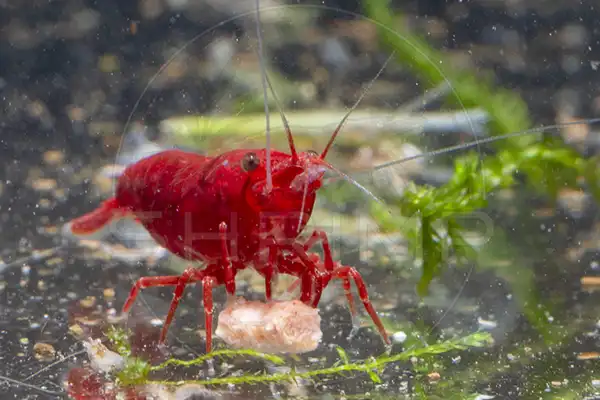
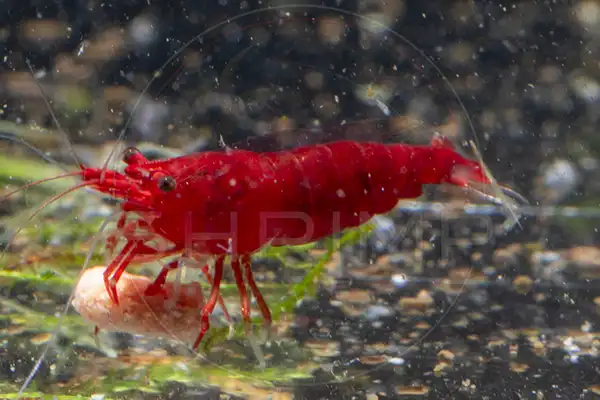
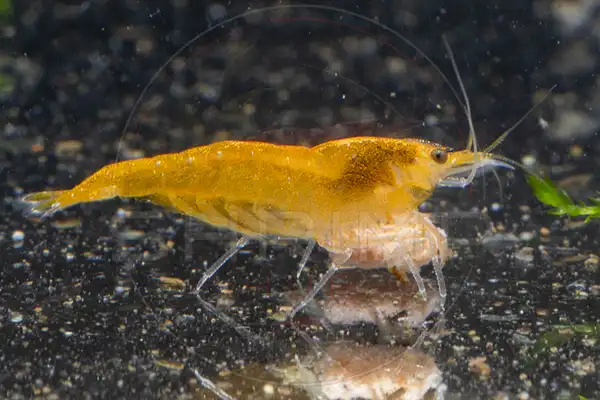
- Cherry shrimp graze biofilm, algae and leftover food all day, and add colour. Because they breed, the clean-up crew grows by itself.
- Ramshorn snails eat leftover food and dead leaves. They breed readily, so numbers follow how much you feed: if you see lots of them, cut back on food.
- Siamese algae eaters are one of the few fish that eat black beard algae, but they grow to around 15 cm and need a tank of 100 litres or more. They are fast, active fish that will eat baby shrimp.
Our advice for shrimp keepers: swap the Siamese algae eater for a group of Otocinclus. You keep the algae control without losing your shrimplets.
Group 3: Ghost shrimp, Malaysian trumpet snails and bristlenose plecos
Best for: bigger community tanks of 80 litres or more, without Neocaridina.
- Ghost shrimp are cheap, hardy scavengers, but some are opportunistic predators and will catch baby shrimp and small fry. Keep them away from a cherry shrimp colony.
- Malaysian trumpet snails burrow through the substrate, stirring it and stopping dead spots forming. They mostly come out at night and breed in line with how much food is available.
- Bristlenose plecos rasp algae off glass and wood and stay smaller than most plecos, at around 12–15 cm. They produce a lot of waste and need driftwood in the tank.
The best clean-up crew for a shrimp-only tank
In a dedicated shrimp tank, the shrimp themselves are the clean-up crew. A colony of cherry shrimp keeps on top of biofilm and leftover food, and the only extras we would add are:
- A few nerite snails for algae on the glass.
- Ramshorn or Malaysian trumpet snails to tidy up leftovers and keep the substrate turning over.
- Otocinclus, if the tank is 40 litres or more and has plenty of algae.
Avoid any fish big enough to fit a baby shrimp in its mouth.
At a glance: which crew members are shrimp-safe?
| Animal | Main job | Adult size | Safe with baby shrimp? |
|---|---|---|---|
| Amano shrimp | Hair and thread algae | 5 cm | Yes |
| Nerite snail | Algae on glass and hardscape | 2–3 cm | Yes |
| Otocinclus | Soft algae and diatoms | 4 cm | Yes |
| Cherry shrimp | Biofilm and leftovers | 2–3 cm | Yes |
| Ramshorn snail | Leftovers and dead leaves | 1–2 cm | Yes |
| Malaysian trumpet snail | Substrate and leftovers | 2–3 cm | Yes |
| Bristlenose pleco | Algae on glass and wood | 12–15 cm | Mostly, but may eat shrimplets |
| Ghost shrimp | Scavenging | 3–4 cm | No |
| Siamese algae eater | Black beard algae | 15 cm | No |
Tips for adding a clean-up crew
- Only add a crew to a cycled, mature tank. Our first shrimp tank setup guide explains how.
- Add animals gradually, not all at once.
- Acclimatise shrimp and snails slowly – see our acclimatising guide.
- Check medicines and fertilisers for copper, which kills shrimp and snails.
- If the crew runs out of algae, add a small amount of food so they don’t starve.
Frequently asked questions
What is the best clean-up crew for a small tank?
For tanks under 40 litres, a colony of cherry shrimp plus a nerite snail or two. Leave out fish like Siamese algae eaters and plecos, which grow too big.
Do cherry shrimp eat algae?
Yes. They graze biofilm and soft algae all day, along with leftover food. For tough hair algae, Amano shrimp are stronger.
Will a clean-up crew stop algae completely?
No. A crew keeps algae under control, but heavy algae usually means too much light or too many nutrients. Fix those first.
Are snails good for a shrimp tank?
Yes. Nerite, ramshorn and Malaysian trumpet snails are all shrimp-safe and help keep the tank clean.
