The Passion Project
The Holy Trinity of Shrimp Keeping
Shrimp keeping begins with the biofilm that shrimp feed on. But before biofilm, there is lighting. So shrimp keeping really starts with the perfect lighting. To truly master this hobby, you need to understand the three pillars that hold everything together: Lights, Plants, and Food. Get these right, and your colony will thrive.
I. Light: Where It All Begins
Here at the Shrimp Hub, your passion has brought us to taking the hobby to bits and rebuilding it from the start. Once your tank is cycled, then we look at the lighting. Is your lighting good enough? Do I need longer, stronger, better lights?
The Lighting Solution
At the moment I’m using the Seaoura SR-657, which is perfect with many features. The main feature I use is the timer—precise timing. I’ve set it in the main tank to when I’m sat there in the living room, from midday to 10pm.
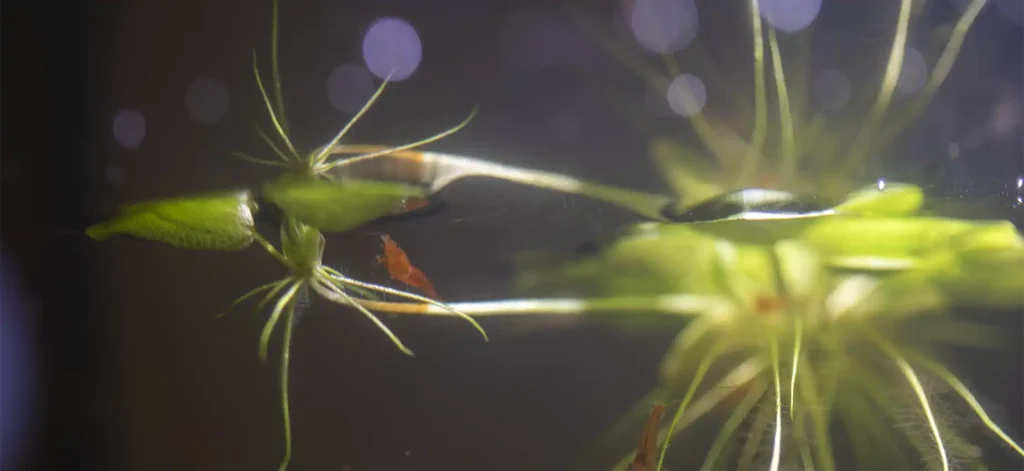
I diffuse the light with frogbit that is a perfect fit for my tank:
Too little light? Remove frogbit.
Too much algae? Let the frogbit grow out.
Algae out of control? Simply reduce the intensity with the built-in controller.
Light is the foundation. Without proper lighting, plants struggle, biofilm doesn’t develop properly, and your entire ecosystem suffers. Master the light first.
II. Plants: The Life Support System
Once you’ve sorted your lighting, it’s time to think about plants. Plants aren’t just decoration—they’re the life support system of your tank. They oxygenate the water, consume nitrates, and create the biofilm that shrimp need to thrive.
Plant Difficulty Levels
Easy Plants are your foundation. They’re forgiving, adapt to various conditions, and don’t demand CO2 or special substrate. Think Java fern, Anubias, and most mosses. Perfect for beginners and essential for shrimp tanks.
Medium Plants need a bit more attention. Better lighting, perhaps some liquid fertiliser, and they’ll reward you with lush growth. Crypts, Amazon swords, and Vallisneria fall into this category.
Hard Plants are the challenge. They demand high light, CO2 injection, nutrient-rich substrate, and precise parameters. Carpeting plants like HC Cuba or delicate red species require commitment, but they create stunning aquascapes.
Types of Plants
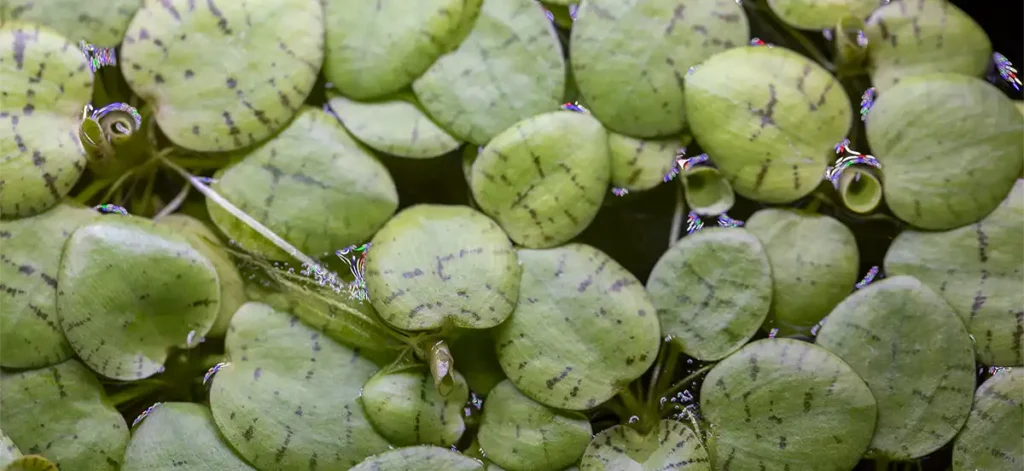
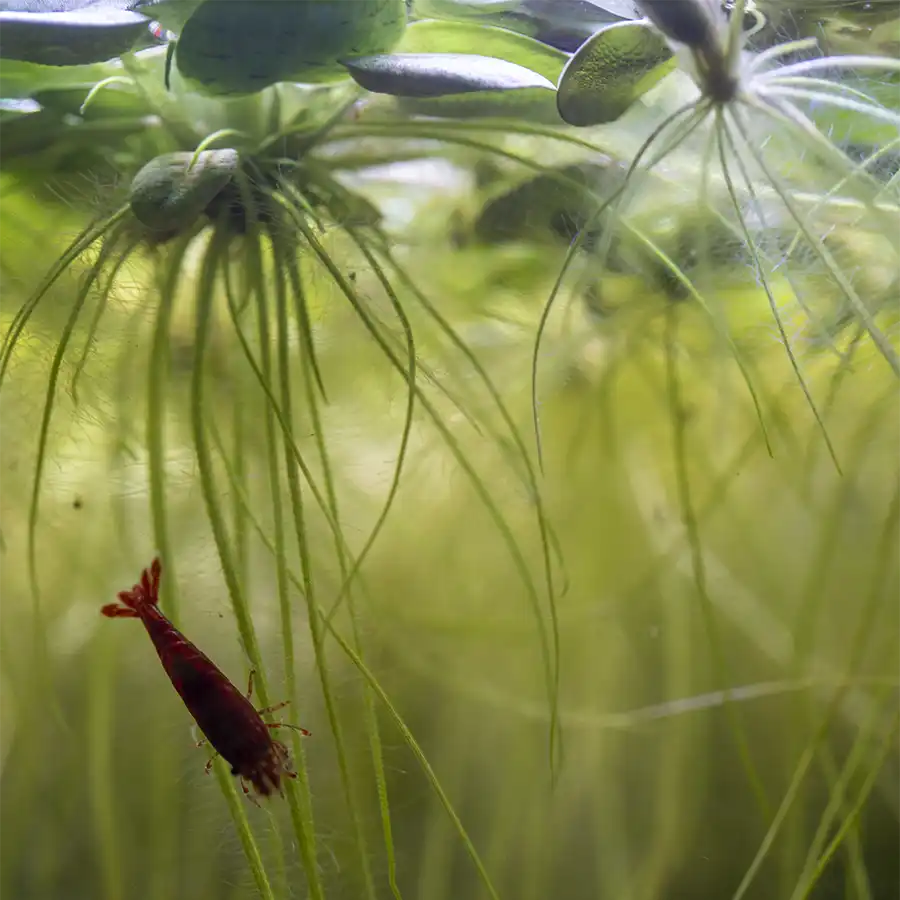
Floating Plants like frogbit, salvinia, and duckweed are brilliant for shrimp tanks. They diffuse harsh lighting, remove excess nutrients, and provide cover. The roots dangle into the water column, creating perfect grazing surfaces covered in biofilm.
Rhizome Plants include Java fern and Anubias. Never bury the rhizome—attach them to wood or stone with thread or superglue. They’re slow growers but virtually indestructible, making them ideal for low-tech setups.
Stem Plants like rotala, ludwigia, and bacopa grow quickly and need regular trimming. They’re excellent for filling in the background and sides, and the cuttings can be replanted to create density.
Mosses: The Perfect Shrimp Plant
Mosses are absolute magic for shrimp keeping. Java moss, Christmas moss, flame moss—they’re all exceptional. Here’s why mosses are essential:
They create biofilm heaven. The dense, intricate structure becomes covered in microorganisms that shrimp constantly graze on. It’s an endless buffet.
They provide breeding grounds. Female shrimp feel secure laying eggs amongst moss, and the complex structure protects them.
They offer hiding places for shrimplets. Baby shrimp are vulnerable, and moss gives them countless tiny spaces to hide whilst they grow, away from potential predators and even overeager adults.
Mosses are easy to keep, attach to any surface, and create that natural, established look that makes an aquascape feel complete.
Aquascaping Layers
Foreground plants are your carpet. Low-growing species like dwarf hairgrass, Monte Carlo, or even just a simple moss carpet. This is where shrimp will spend most of their time grazing.
Midground plants create depth and interest. Crypts, smaller Anubias, and bushier plants work brilliantly here. This is your transitional zone that guides the eye through the scape.
Background plants are your tall stems and large-leafed species. They frame the aquascape and create the impression of depth. Vallisneria, Amazon swords, or dense stem plant forests work perfectly.
The Three Pillars: Lighting, CO2, and Substrate
Lighting we’ve covered—duration and intensity matter. Too much causes algae, too little stunts growth. Find your balance.
CO2 is optional for easy plants but essential for demanding species. Shrimp are tolerant of CO2 injection if done properly. It supercharges plant growth, which means more biofilm and better water quality.
Substrate depends on your plants. Inert substrates like sand or gravel work fine for rhizome plants and mosses. If you want carpeting plants or heavy root feeders, invest in nutrient-rich aquasoil. It buffers water parameters and feeds plants through their roots.
For shrimp breeding, soil substrates are excellent. They lower pH slightly and soften water, which neocaridina tolerate well, and the established colonies thrive in these conditions.
Plants are the second pillar. They work with your lighting to create the environment where biofilm flourishes and shrimp thrive.
III. Food: The Art of Restraint
Finding the perfect food for your shrimp is crucial, but what’s even more important is understanding how much to feed. Here’s the golden rule: only feed what your shrimp can eat in 2 hours.
The Search for the Perfect Food
I’ve tested many foods over the years, and I’m still searching for the perfect one. Each food has its strengths—some promote better colour, others support breeding, some are devoured immediately whilst others sit ignored. The quest continues, and that’s part of the passion.
What I’ve learnt is that no single food does everything. Different foods serve different purposes, and what works brilliantly for one colony might be less impressive for another.
Watch your colony. Drop in food and observe. If there’s still food sitting around after a couple of hours, you’ve fed too much. If the shrimp devour it all within 30 minutes and are still actively searching, you can gradually increase the amount.
The Danger of Overfeeding
Overfeeding is far more dangerous than underfeeding. Uneaten food decomposes, spiking ammonia and nitrites—exactly what will crash your tank and kill your shrimp. It also fuels algae blooms, creates bacterial issues, and deteriorates water quality rapidly.
Shrimp are grazers by nature. They’re designed to spend their entire day picking at biofilm, algae, and detritus. They don’t need huge meals. In a well-established tank with plenty of plants and biofilm, your shrimp are constantly feeding themselves. Supplemental food is just that—supplemental.
Underfeeding is Safer
If you’re unsure, feed less. Your shrimp will survive perfectly well on biofilm alone in a mature tank. Missing a feeding day or two won’t harm them—it might even encourage them to clean the tank more thoroughly. A hungry shrimp colony is an active, productive colony.
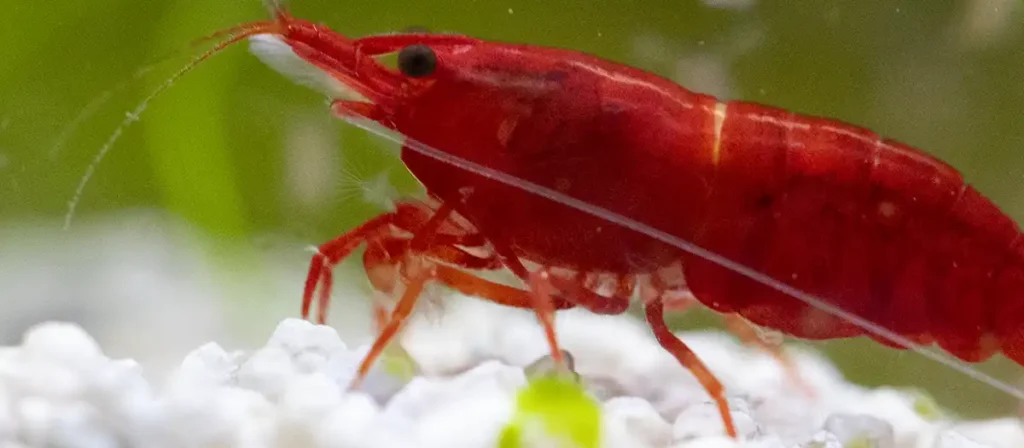
Types of Shrimp Food
There’s a huge variety available: pellets, wafers, powders, blanched vegetables, and specialised breeding foods. Variety is good. Rotate between protein-rich foods, vegetable-based foods, and mineral supplements.
Look for foods that:
- Sink quickly rather than floating away
- Don’t cloud the water
- Are appropriately sized for shrimp to handle
- Contain natural ingredients without excessive fillers
Some keepers swear by blanched spinach, courgette, or cucumber. Others prefer commercial foods formulated specifically for shrimp. Experiment and see what your colony responds to best.
Feeding Schedule
Many successful breeders feed once every 2-3 days rather than daily. Some only feed 2-3 times per week. There’s no single perfect schedule—it depends on your tank’s maturity, plant mass, and colony size.
Start conservative. Feed small amounts infrequently. You can always feed more, but you can’t take food back out once it’s decomposing in your substrate.
Remember: a thriving biofilm is worth more than any commercial food you can buy.
Food is the third pillar. It complements what your lights and plants have already created, but it must be given with careful consideration and restraint.
The Trinity in Balance
Lights grow the plants. Plants create the biofilm. Food supplements what nature provides. When all three work in harmony, you don’t just keep shrimp—you create a thriving ecosystem where they breed, colour up, and flourish.
Master the Holy Trinity, and you’ll master shrimp keeping.
Every thriving shrimp colony starts with understanding the fundamentals—Lights, Plants, and Food.
